
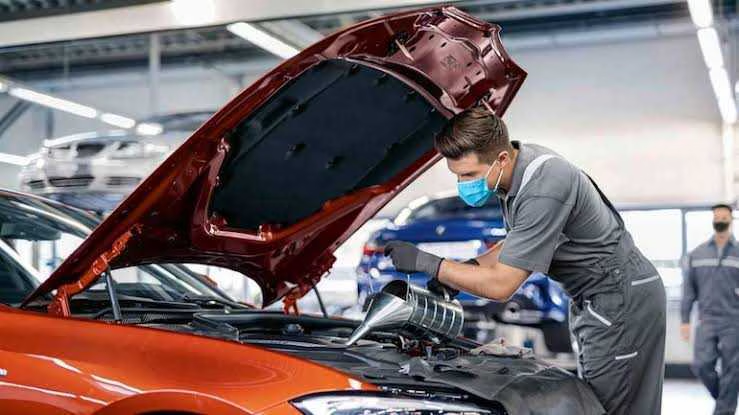
The Workshop Setup Needed for Modern Vehicle Body Repairs
Vehicle body repair has become far more technical than removing damaged panels, straightening visible dents and preparing a car for paint. After a collision, damage may affect the underlying structure, suspension geometry, driver assistance systems or parts connected to an electric vehicle battery. A workshop needs the equipment to identify those problems accurately before repairs move forward.
This places greater demands on body shops. Technicians may be working on a small passenger car one day, an SUV with structural damage the next, followed by an electric vehicle or a commercial model requiring a very different approach. The equipment in the workshop has to support those differences rather than limit the type of repair the team can complete correctly.
A professional automotive repair equipment provider will typically support body shops with systems for holding, measuring, straightening and verifying damaged vehicles. These are not separate tasks that happen in isolation. The vehicle needs to be secured properly, measured against the correct specifications and checked again once structural repairs have been completed.
One of the central pieces of equipment in a collision repair workshop is the frame machine or structural repair bench. When an impact has moved parts of the vehicle away from their intended position, the bench provides a stable working base. Technicians can anchor the vehicle, apply controlled pulling force and work towards restoring the structure to the required dimensions.
Measuring equipment is equally important. A repair can look neat from the outside while structural reference points remain out of position. Electronic measuring systems allow technicians to compare the damaged vehicle with dimensional data, document the condition before repair and confirm accuracy afterwards. On vehicles fitted with advanced driver assistance systems, structural position matters because sensors and related systems depend on the vehicle being repaired correctly.
A modern body shop may need equipment across several areas.
- Structural benches and pulling systems for collision damage
- Anchoring fixtures and positioning jigs to hold components accurately during repair
- Electronic measuring systems to check dimensions before and after work
- Suitable equipment and working procedures for electric vehicles and larger models
Workshop setup is not only about owning individual machines. The repair process has to flow sensibly from assessment to anchoring, measurement, correction and final checks. If a vehicle has to be moved repeatedly between unsuitable bays, or if technicians lack access to the right fixtures and dimensional information, time is lost and the risk of repeat work increases.
Vehicle construction is also changing. Mixed materials, advanced safety systems and electric vehicle architecture mean that repair methods suited to older models cannot simply be applied to every newer vehicle. Technicians need training, technical information and equipment that reflects the vehicles now arriving in repair centers.
This is especially true for body shops handling a broad mix of work. A facility repairing passenger vehicles, SUVs, vans or heavier commercial models may require different bench capacities, fixture systems and measuring options. The workshop has to match the repairs it accepts rather than relying on one setup for every job.
Customers may only see the finished bodywork when a repaired vehicle is returned. Behind that finish is a sequence of measuring, holding, pulling and verification work that determines the quality of the repair. The right workshop setup gives technicians the tools to complete that work accurately and gives body shops the ability to deal with increasingly complex vehicles.